Guides/Problems·7 min read·Updated September 5, 2026
A glossy sealed surface can look fantastic and still feel slippery underfoot when it rains. Here is why that happens and how a non-slip additive solves it without changing the look you chose.
Key takeaways
- 1Sealer itself does not cause slipperiness directly, but a smooth, glossy film sitting on top of concrete can reduce the natural microtexture that provides grip, especially when wet.
- 2Higher-sheen finishes like gloss tend to feel smoother underfoot than matte, though any finish can feel slick on a wet surface without added texture.
- 3A non-slip additive is a fine texturizing agent blended directly into the sealer before application, adding grip without requiring a different sealer product or a separate step.
- 4Non-slip additive can be added to any of the three finish options, matte, semi-gloss or gloss, so homeowners do not have to give up a preferred look to gain traction.
- 5Pool surrounds, walkways, steps and stamped patios are the areas where a non-slip additive is most commonly recommended in Southwestern Ontario, particularly for surfaces used barefoot or exposed to winter ice.
One of the more common questions homeowners ask before sealing a patio, walkway or pool deck is whether the sealer will make the surface slippery. It is a fair concern. A freshly sealed concrete surface can look glassy and smooth, especially with a semi-gloss or gloss finish, and that appearance naturally raises the question of grip, particularly for families with kids running around a pool or anyone concerned about icy walkways in winter. The good news is that traction on sealed concrete is a solvable design choice, not an unavoidable trade-off, and a non-slip additive is the tool that solves it without forcing a homeowner to give up the finish they actually want.
Why sealed concrete can feel slippery
Unsealed concrete has a naturally rough, porous surface that provides a fair amount of grip on its own, though it also stains, absorbs water and weathers faster than sealed concrete. When sealer is applied, it fills in some of that microtexture, smoothing the surface to create the glossy or satin appearance that makes sealed concrete look so much richer than bare concrete. That same smoothing effect is what can reduce traction, particularly when the surface is wet. Water sitting on top of a smooth sealer film has less microtexture to break the surface tension between a foot and the concrete, which is the basic mechanism behind any slippery wet surface, sealed or not. This effect tends to be more noticeable with higher-sheen finishes, since a glossier surface is typically smoother than a matte one, though even a matte-sealed surface can feel slick when wet without any added texture.
How finish choice affects grip
Of the three finishes TriCity offers, matte tends to retain the most natural surface feel since it has no added sheen and generally involves less of a build-up film than semi-gloss or gloss. Semi-gloss, the most popular option overall, sits in the middle, offering a noticeable satin enhancement to colour and pattern with a moderate surface feel. Gloss delivers the deepest colour enhancement and the most pronounced wet-look shine, but it is also generally the smoothest of the three finishes underfoot. None of this means gloss should be avoided on surfaces where grip matters. It means that gloss, and to a lesser extent semi-gloss, are the finishes where a non-slip additive is most worth considering if the surface will regularly be walked on when wet.
What a non-slip additive actually is
A non-slip additive is a fine texturizing agent, often a specially graded aggregate or polymer particulate, that gets blended directly into the sealer before it is applied. Rather than being a separate coating or an extra step added on top of a finished seal job, it becomes part of the sealer itself, distributed evenly across the surface as the sealer is sprayed and back-rolled on. The result is a surface that retains the sheen and colour enhancement of the chosen finish while adding a slight, consistent texture that restores grip, particularly when the surface is wet. Because it is mixed into the sealer rather than applied separately, it does not require an additional visit or a different product line, and it is available with any of the three finishes.
Where non-slip additive matters most
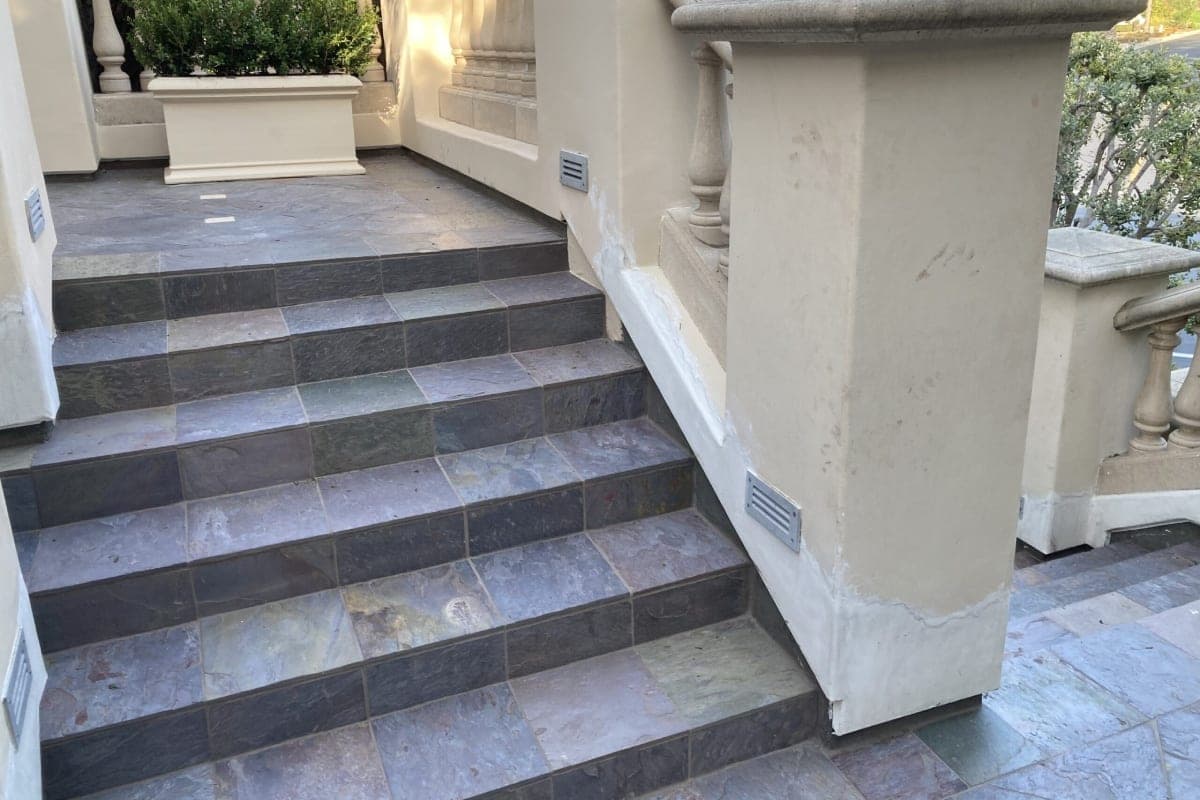
Pool surrounds are the single most common place TriCity recommends a non-slip additive, since these surfaces are wet almost constantly through the summer and are frequently walked on barefoot, which makes grip a genuine safety consideration rather than just a comfort preference. Steps and stairs are another priority area, since a slip on a stepped surface carries more risk than one on a flat patio, and steps often see water pooling on treads regardless of finish. Walkways, particularly ones that see winter foot traffic where ice or light snow can sit on the surface before it is cleared, also benefit from added texture. Stamped patios, which already carry more textural interest than plain concrete, can still benefit from a non-slip additive if a homeowner has chosen a higher-gloss finish for maximum colour enhancement and wants to offset the smoother feel that comes with it.
Driveways and non-slip additive
Driveways are generally a lower priority for non-slip additive compared to patios and walkways, since most driveway use involves either vehicles, which do not rely on the same surface grip as bare feet, or shoes, which provide their own traction regardless of the concrete surface beneath. That said, some homeowners with steep driveways, or driveways with a section used as an extended walkway or play area, do opt for it, and it remains available for driveways sealed in any of the three finishes just as it is for patios and walkways. The decision typically comes down to how the specific surface gets used day to day rather than a blanket rule for all driveways.
Winter grip and non-slip additive
Southwestern Ontario winters bring their own traction concerns separate from a rainy summer day, since ice and light frost can form on any outdoor concrete surface, sealed or not. A non-slip additive does not eliminate the risk of walking on ice, which no sealer or additive can fully prevent, but it does provide additional texture that can help underfoot compared to a smooth, glossy surface with a thin layer of frost or light snow on it. For walkways and entry steps that see regular winter foot traffic, this is often part of the conversation alongside the sealer's overall resistance to road salt and freeze-thaw cycling, covered in more detail in our companion guide on road salt and freeze-thaw protection.
Does non-slip additive affect the look of the finish?
One question homeowners often have is whether adding a texturizing agent will make a gloss finish look less glossy or dull down the colour enhancement they are paying for. In practice, a properly blended non-slip additive has minimal visual impact on the finish's colour or sheen. The texture it adds is fine enough that it does not meaningfully change how light reflects off the surface or how deep the colour appears, which means a homeowner who wants the maximum colour enhancement of a gloss finish on a pool patio does not have to compromise on grip to get it. This is one of the more practical advantages of blending the additive into the sealer itself rather than applying a separate anti-slip coating, which can sometimes visibly dull or cloud a glossy finish.
Deciding whether non-slip additive is right for your project
The right call generally comes down to how a specific surface is used. A pool deck, exterior steps, or a walkway with regular winter foot traffic are strong candidates regardless of which finish is chosen. A driveway used mainly for vehicles, or a patio in a spot with dry summer use and minimal winter foot traffic, may not need it at all. TriCity's free site assessment includes this conversation as part of the finish discussion, so homeowners can weigh the specific areas of a project, whether it is a stamped patio detailed at /services/stamped-concrete-sealing, a walkway at /services/walkway-sealing, or a driveway, and decide where added grip makes sense without guessing.
Getting the right finish and grip combination
Choosing between matte, semi-gloss and gloss, and deciding where to add non-slip additive, is part of the standard planning conversation for every TriCity project. More detail on how the three finishes compare is available at /finishes. TriCity Concrete Sealing has sealed more than 500 projects across London, Woodstock, Brantford, St. Thomas, Stratford, Ingersoll, Tillsonburg, St. Marys, Aylmer and Simcoe over 8-plus years, with a 5-year workmanship warranty covered at /warranty and full insurance coverage on every job.
Getting started
If a pool deck, set of steps, or walkway on your property has felt slippery in the past, or you are planning a new seal job and want to avoid the issue entirely, a non-slip additive is likely part of the answer. Reach out through /contact for a free assessment that includes a conversation about finish and grip together.
Frequently asked questions
Does sealing concrete always make it slippery?
Not necessarily, but sealer does smooth the surface somewhat compared to bare concrete, which can reduce grip when the surface is wet, particularly with higher-gloss finishes. A non-slip additive addresses this directly without requiring a different finish.
Can non-slip additive be added to a gloss finish, or only matte?
It can be added to any of the three finishes, matte, semi-gloss or gloss. It does not meaningfully change the colour or sheen of the chosen finish, so a gloss surface with additive still shows the full colour enhancement gloss is chosen for.
Where is non-slip additive most commonly recommended?
Pool surrounds, steps, and walkways with regular foot traffic, especially in wet or winter conditions, are the areas TriCity most often recommends it. Driveways are a lower priority since vehicle and shoe traffic rely less on bare-surface grip.
Will non-slip additive eliminate the risk of slipping on ice?
No additive can fully prevent slipping on ice. Non-slip additive adds surface texture that can help traction under light frost or damp conditions, but normal winter precautions still apply to any outdoor surface.
Does adding non-slip additive cost extra or require a separate appointment?
It is blended directly into the sealer before application, so it does not require a separate visit. It is discussed as part of the standard finish conversation during the free site assessment.
Can non-slip additive be added later if I already sealed my patio without it?
Yes, it can be included in a future recoat. Since TriCity's sealer re-emulsifies previous solvent-based coats, a recoat with non-slip additive bonds seamlessly into the existing sealer layer.
Free quote
Want us to just handle it?
Free site assessment, finish samples in hand, written quote with a 5-year warranty.
Keep reading
Problems · 7 min
White Haze on Sealed Concrete: Causes and Fixes
A cloudy white film on a newly sealed driveway or patio is one of the most common concrete sealing complaints. Here is what usually causes it and how it gets corrected.
Finishes · 8 min
Matte vs Semi-Gloss vs Gloss: Choosing a Concrete Sealer Finish
The finish you choose changes how a driveway or patio looks and how it performs underfoot. Here is how matte, semi-gloss and gloss actually compare before you decide.
Sealers · 8 min
Solvent-Based vs Water-Based Concrete Sealers: What Actually Lasts in Ontario
Not all acrylic sealers behave the same once winter arrives. Here is how solvent-based and water-based formulas differ and why the choice matters in Southwestern Ontario.