Guides/Finishes·8 min read·Updated September 5, 2026
The finish you choose changes how a driveway or patio looks and how it performs underfoot. Here is how matte, semi-gloss and gloss actually compare before you decide.
Key takeaways
- 1Matte, semi-gloss and gloss sealers use the same high-quality solvent-based acrylic formula from TriCity Concrete Sealing; the finish only changes how much sheen and colour enhancement shows on the surface.
- 2Semi-gloss is the most requested finish because it enhances stamped and coloured concrete without a heavy shine, and it suits most driveways and patios across Southwestern Ontario.
- 3Matte is the practical choice where slip resistance matters most, such as pool patios, steps and broom-finished walkways, and it also hides minor surface imperfections better than a shinier finish.
- 4Gloss delivers the deepest colour enhancement and a wet look, and it is most often chosen to showcase a stamped or coloured driveway or patio as a feature rather than a purely functional surface.
- 5A non-slip additive can be mixed into any of the three finishes, so choosing gloss or semi-gloss does not mean giving up traction where it is needed.
Once a homeowner in London, Woodstock or Stratford decides to seal a driveway or patio, the next question is almost always about finish. Matte, semi-gloss and gloss look different in photos and even more different in person, and the choice is not purely cosmetic. Sheen level affects how a surface reads in bright sun, how it handles wet or icy conditions, and how forgiving it is of the small surface imperfections that show up on almost any slab after a few Ontario winters. This guide walks through what each finish actually does, where it tends to work best, and how the decision fits into the sealing process.
The finishes start from the same sealer
It helps to understand that matte, semi-gloss and gloss are not three different products in the way that, say, a driveway sealer and a countertop sealer are different products. TriCity Concrete Sealing applies a high-quality solvent-based acrylic sealer for every finish level, chosen because solvent-based formulas penetrate deeper into the concrete, enhance colour more effectively than water-based alternatives, and re-emulsify with previous solvent-based coats so recoats bond seamlessly rather than layering unevenly. The sheen level is a function of how the sealer is formulated and applied, not a change in the underlying chemistry or the protection it provides against road salt, UV exposure and hot tires. More detail on why the solvent-based approach matters for this climate is covered in our companion guide on solvent-based versus water-based sealers.
That shared foundation matters for decision-making because it means the choice between finishes is really a choice about appearance and surface feel, not a trade-off between a "good" sealer and a "basic" one. A matte finish is not a lesser product than a gloss finish; it is a different look built on the same protective base, described in more detail at /finishes.
Matte: the natural, no-sheen option
Matte finish leaves concrete looking close to its natural, unsealed appearance, with no noticeable shine. For broom-finished driveways and exposed aggregate surfaces, many homeowners actually prefer this, since it keeps the surface looking like concrete rather than like it has been coated in plastic. Matte also does a better job of hiding minor surface imperfections, hairline cracks, or slight colour variation than a glossier finish would, since sheen tends to draw the eye toward surface flaws rather than away from them.
The other reason matte comes up often in Southwestern Ontario is slip resistance. Areas around pools, exterior steps, and walkways that see heavy foot traffic in wet or icy conditions benefit from a lower-sheen surface, since gloss finishes can feel slicker underfoot when wet, particularly on smooth-troweled concrete. For a pool patio in Brantford or a set of front steps in St. Thomas, matte with a non-slip additive is a common combination. Full detail on the matte option, including where it fits best, is available at /finishes/matte.
Semi-gloss: the most popular middle ground
Semi-gloss, sometimes described as a satin finish, is the finish TriCity applies most often. It enhances the colour of stamped and coloured concrete meaningfully more than matte does, giving stamped patios and driveways more depth and richness, but without the heavy, almost plastic-looking shine of a full gloss coat. For homeowners who are not sure which way to go, semi-gloss tends to be the safer default: it looks intentional and finished without drawing attention to itself, and it works across a wide range of concrete types, from stamped driveways in new London subdivisions to plain broom-finished patios in older Woodstock neighbourhoods.
Semi-gloss also tends to age gracefully. As a sealer wears down slightly between reseals, typically every two to four years depending on traffic and exposure, a semi-gloss surface shows that wear less dramatically than a high-gloss surface would, since there is less initial sheen to lose. That makes it a practical choice for driveways in particular, which see the most wheel traffic, salt exposure and UV load of any sealed surface on a typical property. More on this finish is at /finishes/semi-gloss.
Gloss: the deepest colour and the wet look
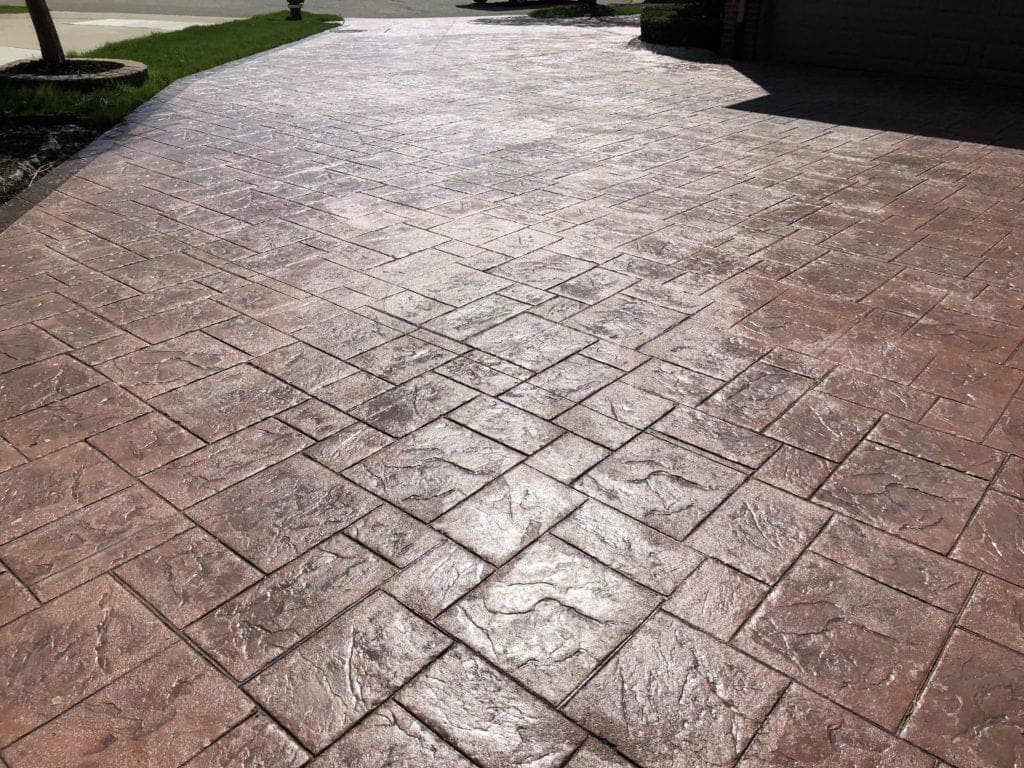
Gloss finish produces the most dramatic transformation of the three. It delivers the deepest colour enhancement of any finish level and gives concrete a wet, glossy look that stays even when the surface is completely dry. For stamped and coloured concrete especially, gloss can make a patio or driveway look genuinely new, with pattern lines and colour variation showing far more clearly than under matte or semi-gloss. This is why gloss tends to get chosen when a homeowner wants their stamped patio or driveway to function as a visual feature of the property, not just a functional surface.
Gloss is less commonly chosen for plain grey broom-finished driveways, since the effect is most noticeable on concrete that already has colour or texture to enhance. It is also worth being upfront that gloss surfaces can feel slicker when wet than matte or semi-gloss, which is one reason the non-slip additive comes up so often in these conversations, particularly for pool surrounds or entryways. Full detail on the gloss option is at /finishes/gloss.
Non-slip additive works with any of the three
A common misconception is that choosing a glossier finish means accepting a slicker surface with no way around it. That is not the case. TriCity Concrete Sealing can mix a non-slip additive into the sealer regardless of which finish is chosen, adding texture and traction to the cured coating without changing the underlying appearance much. This means a homeowner who wants the deep colour enhancement of gloss on a pool patio does not have to choose between looks and safety; the additive addresses the slip concern directly. It is worth raising this option specifically during the free site assessment if the surface being sealed sees regular bare feet, wet conditions, or winter foot traffic.
How the surface type factors in
Different surfaces tend to pair naturally with different finishes, though none of these pairings are rules. Driveways in new subdivisions around London and Woodstock, many of which have stamped or coloured borders, often look best in semi-gloss for the everyday drive and gloss for a stamped accent band or apron. Patios, especially stamped ones, are where gloss gets requested most, since the outdoor living space is meant to be looked at as much as used. Walkways tend toward matte or semi-gloss for practical footing. Exposed aggregate surfaces, common on older homes in St. Thomas and Ingersoll, usually look most natural in matte, since the exposed stone texture already provides visual interest without needing added sheen. Commercial surfaces, such as sealed walkways or loading areas, more often use matte or semi-gloss for durability and slip resistance under heavier and more frequent use. More on how finish choice interacts with surface type is covered under /services/driveway-sealing, /services/stamped-concrete-sealing and /services/exposed-aggregate-sealing.
Finish and the freeze-thaw reality
Southwestern Ontario's winters put real stress on sealed concrete, with repeated freeze-thaw cycles, heavy road salt exposure, and hot tires in summer all working against whatever coating is on the surface. None of the three finishes handle this differently in terms of raw protection, since the solvent-based acrylic base is the same across matte, semi-gloss and gloss, and all three offer strong resistance to salt, UV and hot tires while remaining breathable enough to let trapped moisture escape rather than blister the coating. What does change slightly is how wear shows over time, as noted above, with lower-sheen finishes generally masking gradual wear more than high-gloss ones. This is a factor worth discussing when planning reseal timing, which is covered in more depth in our guide on how often to reseal concrete in this region.
Making the decision
For most homeowners, the decision comes down to three questions: how much shine do you want, does the surface need extra slip resistance, and what type of concrete are you sealing. A plain grey driveway with heavy daily use often does well in semi-gloss. A pool patio or set of steps often does better in matte with a non-slip additive. A stamped or coloured patio meant to be shown off often earns its keep in gloss. None of these are locked in permanently, since a different finish can be applied at the next reseal if the first choice does not suit the space as expected.
TriCity Concrete Sealing has applied all three finishes across more than 500 projects in London, Woodstock, Brantford, St. Thomas, Stratford, Ingersoll, Tillsonburg, St. Marys, Aylmer and Simcoe over more than 8 years in business, and every project is backed by a 5-year workmanship warranty. If you are unsure which finish fits your property, the fastest way to decide is to book a free site assessment and quote through /contact or by, where the crew can look at the actual surface, walk through samples, and give a straightforward recommendation rather than a guess from a photo.
Frequently asked questions
Is one finish more durable than the others?
No. Matte, semi-gloss and gloss all use the same high-quality solvent-based acrylic sealer, so protection against road salt, UV and hot tires is the same across all three. The finish changes appearance and how visibly wear shows over time, not the underlying durability.
Which finish is the most popular?
Semi-gloss is requested most often because it enhances colour on stamped and coloured concrete without the heavy shine of gloss, and it works well across most driveways and patios in Southwestern Ontario.
Can I add slip resistance to a gloss finish?
Yes. A non-slip additive can be mixed into the sealer regardless of which finish is chosen, so a glossier look does not have to come at the expense of traction on steps, patios or pool surrounds.
What finish is best for a pool patio?
Matte is the most common choice for pool patios and steps because it offers the most natural slip resistance underfoot, especially when combined with a non-slip additive, though gloss with the additive is also an option for a more decorative look.
Can I switch finishes at the next reseal?
Yes. Concrete typically gets resealed every two to four years depending on traffic and exposure, and a different finish can be applied at that point if the current one is not giving you the look or feel you want.
How do I decide which finish is right for my property?
The easiest way is a free site assessment through /contact or by, where the surface type, use and your preference for sheen can be discussed against the actual concrete rather than a photo.
Free quote
Want us to just handle it?
Free site assessment, finish samples in hand, written quote with a 5-year warranty.
Keep reading
Sealers · 8 min
Solvent-Based vs Water-Based Concrete Sealers: What Actually Lasts in Ontario
Not all acrylic sealers behave the same once winter arrives. Here is how solvent-based and water-based formulas differ and why the choice matters in Southwestern Ontario.
Costs · 7 min
How Concrete Sealing Is Priced: What Goes Into a Quote
Every concrete sealing quote is built around the specific property, not a flat rate. Here is what factors actually shape the number you receive.
Planning · 7 min
How Often Should You Reseal Concrete in Southwestern Ontario
Two to four years is the general guideline, but traffic, exposure and finish all shift the timeline. Here is how to read your own concrete rather than guess.