Guides/Surfaces·8 min read·Updated September 5, 2026
Stamped concrete looks its best only as long as the sealer protecting it is doing its job. Here is how sealing works on stamped surfaces, what finish to choose, and how often to reseal.
Key takeaways
- 1Sealer is what gives stamped concrete its rich colour depth and protects the texture from wear, so an unsealed or under-sealed stamped surface fades and erodes faster than a plain broom-finished slab.
- 2A high-quality solvent-based acrylic sealer penetrates deeper into the surface than water-based products and enhances colour more noticeably, which matters most on textured, multi-tone stamped patterns.
- 3Semi-gloss is the most popular finish for stamped concrete because it enhances colour and pattern definition without the very high shine of a gloss finish.
- 4Stamped concrete typically needs resealing every 2 to 4 years in Southwestern Ontario, sooner on driveways exposed to tires and road salt than on patios.
- 5A non-slip additive can be blended into any finish, which matters on stamped patios and pool surrounds where the textured surface can still feel slick when wet and freshly sealed.
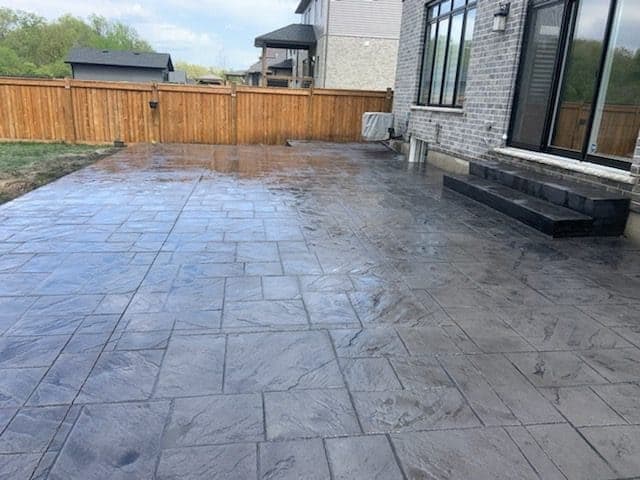
Stamped concrete is one of the more visually striking surfaces a homeowner can put in around their home, whether it is a patio off the back of the house, a stamped walkway leading to the front door, or a driveway finished to look like natural stone. What often gets overlooked is that almost all of that visual impact comes from the sealer, not just the concrete itself. The stamping process creates the texture and pattern, but it is the sealer that deepens the colour, adds the sheen, and protects the surface from the wear that would otherwise flatten and fade it within a season or two. Understanding how sealing works on stamped concrete, and what to expect from the process, helps homeowners across London, Woodstock, Brantford, St. Thomas, Stratford, Ingersoll, Tillsonburg, St. Marys, Aylmer and Simcoe get the most out of a surface that represents a real investment.
Why stamped concrete needs sealer more than plain concrete does
A plain broom-finished driveway can survive for years with no sealer at all, though it will weather and stain more than a sealed one. Stamped concrete is a different story. The stamping process presses a pattern into the surface while the concrete is still plastic, and often a colour hardener or release agent is used to create depth and contrast in the finish. That decorative layer sits close to the surface, which means it is directly exposed to foot traffic, tire wear, UV light and, in this region, road salt through the winter. Without sealer, that decorative colour and texture erodes much faster than the structural concrete underneath it. Sealer forms a protective layer over the surface, locking in the colour and slowing the wear that would otherwise dull the pattern within a season or two.
How a solvent-based acrylic sealer performs on stamped textures
TriCity Concrete Sealing uses a high-quality solvent-based acrylic sealer rather than a water-based product, and the difference matters most on textured surfaces like stamped concrete. Solvent-based sealers penetrate deeper into the surface profile, which means they get further into the grooves, joints and texture that stamping creates rather than sitting only on the highest points. That deeper penetration also produces noticeably stronger colour enhancement, which is a large part of why stamped concrete looks so much richer immediately after a proper seal job. Solvent-based sealers remain breathable, allowing moisture vapour to escape from beneath the slab, which matters through Southwestern Ontario's freeze-thaw winters. And because the product re-emulsifies previous solvent-based coats, recoating an already-sealed stamped surface bonds seamlessly into the existing layer rather than sitting on top as a separate film that can peel or delaminate.
Choosing a finish for stamped concrete
TriCity offers three finish options, and stamped concrete is the surface type where the choice matters most, since the finish interacts directly with the pattern's texture and colour contrast. A matte finish keeps the natural look of the concrete with no added sheen, which some homeowners prefer on driveways where they want the stamped pattern to read as closer to natural stone without an obvious sealed appearance. Semi-gloss is the most popular choice for stamped patios and walkways because it adds a satin sheen that enhances the colour and pattern definition without going as far as a full wet look. Gloss delivers the deepest colour enhancement and the most pronounced wet-look shine, which some homeowners choose for feature areas like a stamped patio or pool deck where maximum visual impact is the goal. All three finishes are available with a non-slip additive, which is worth discussing for any stamped surface used barefoot or near water. Full detail on how the finishes compare is available at /finishes.
The sealing process for a stamped surface
The process starts with a thorough pressure wash to remove dirt, algae, efflorescence and any residue sitting in the texture of the stamped pattern, since sealer applied over debris will trap it under the finish. The surface is then given time to dry fully, which is especially important on stamped concrete because moisture can hide in the deeper grooves of the pattern longer than on a flat surface. Any minor cracks or surface issues are addressed before sealing, and areas like planting beds or house siding are masked off to keep overspray contained. Sealer is applied with a sprayer and back-rolled by hand, a step that matters even more on textured surfaces because it works the sealer evenly into the pattern's grooves and prevents the lap marks that can otherwise show as streaks across a stamped design. Once applied, the surface is dry to the touch within 1 to 2 hours, safe for foot traffic the next day, and ready for vehicle traffic after 48 to 72 hours if the stamped area is a driveway. Sealing is done when the surface is dry and temperatures sit roughly between 10 and 30 degrees Celsius, which in this region typically means a spring or fall application window.
How often stamped concrete needs resealing
Stamped concrete in Southwestern Ontario generally needs resealing every 2 to 4 years, though the exact timing depends heavily on how the surface is used. A stamped patio that sees mostly foot traffic and is protected from vehicles tends to hold its seal toward the longer end of that range. A stamped driveway exposed to tire wear, road salt and the full swing of freeze-thaw cycles through winter will typically need attention closer to the 2-year mark. Signs that a stamped surface is due for resealing include a duller, flatter appearance where the colour used to look richer, water no longer beading on the surface, and the texture starting to feel rougher or more porous underfoot. Because the sealer re-emulsifies previous solvent-based coats, a professional recoat on a stamped surface that has been maintained properly bonds seamlessly, which keeps the pattern looking consistent rather than showing patchwork from repeated applications.
Stamped concrete across different applications
Stamped patios are the most common application TriCity seals, and the process there focuses on colour enhancement and a finish that suits how the space is used, whether that is a semi-gloss around a dining area or a non-slip gloss near a pool. Stamped driveways carry more structural demands from vehicle weight and tire wear, so the sealer's penetration and durability matter more than the sheen level chosen. Stamped walkways sit somewhere in between, usually seeing regular foot traffic and exposure to winter salt if they run along a main path to the door. Each of these surfaces benefits from the same core sealing approach, but the specific finish and reseal timing can be tailored to how the area gets used. More detail on stamped concrete work specifically is available at /services/stamped-concrete-sealing, and homeowners weighing sealer against a patio surface can also review /services/patio-sealing for the broader picture.
Common mistakes homeowners make with stamped concrete sealing
The most common mistake is waiting too long between reseals, which lets the surface dry out and become more porous, making the eventual recoat less effective and the colour harder to restore fully. Another is choosing a finish without considering how the surface is used, such as picking a high-gloss finish for a pool deck without a non-slip additive, which can create a slippery surface when wet. A third mistake is attempting a DIY seal with a roller-only application and no back-rolling technique, which tends to leave visible lap marks on a patterned surface where they are especially noticeable. Professional application with a sprayer and back-roll avoids that issue and produces a more even, consistent result across the full stamped area.
Why sealing is worth the investment for stamped concrete
Stamped concrete typically costs more to install than a plain broom-finished surface, which makes protecting that investment worthwhile. A well-maintained sealing schedule keeps the colour looking close to how it did on installation day, protects the surface from the wear that flattens texture over time, and helps the concrete resist the moisture intrusion and freeze-thaw damage that are common concerns in this region's winters. TriCity Concrete Sealing has sealed more than 500 projects across Southwestern Ontario over 8-plus years, backed by a 5-year workmanship warranty and full insurance coverage. A free site assessment and quote is available for anyone with a stamped patio, walkway or driveway that could use a professional seal, whether it is the first application or a routine recoat. Details on the warranty are at /warranty, and homeowners in Woodstock or Brantford specifically can find local information at /service-areas/woodstock and /service-areas/brantford.
Getting started
A stamped concrete surface represents real cost and effort at installation, and the sealer is what keeps that investment looking good for years afterward. Whether it is a brand-new stamped patio ready for its first coat or an older driveway that has gone too long without attention, TriCity Concrete Sealing can assess the surface and recommend the right finish and timing. Reach out through /contact to arrange a free assessment.
Frequently asked questions
Does stamped concrete really need to be sealed, or is it optional?
Sealing is strongly recommended for stamped concrete. Without it, the decorative colour and texture created during stamping wears down much faster from foot and vehicle traffic, UV exposure and, in this region, road salt, and the surface loses its colour depth and definition far sooner than a sealed one.
Which finish looks best on stamped concrete?
Semi-gloss is the most popular choice for stamped patios and walkways because it enhances colour and pattern definition with a satin sheen. Gloss gives the deepest colour enhancement for a wet-look finish, and matte keeps a more natural, low-sheen appearance. All three are available with a non-slip additive.
How often does stamped concrete need to be resealed in Southwestern Ontario?
Typically every 2 to 4 years. Stamped driveways exposed to tires and road salt tend to need resealing closer to the 2-year mark, while stamped patios protected from vehicle traffic often hold their seal toward the longer end of that range.
Can a non-slip additive be added to a stamped patio near a pool?
Yes. A non-slip additive can be blended into any of the three finishes and is worth considering for stamped patios, pool surrounds and walkways where the surface may be wet and used barefoot.
Will resealing change the colour of my stamped concrete?
A fresh coat of solvent-based acrylic sealer typically restores and deepens the colour that has faded since the last application, since the sealer's penetration and colour enhancement is part of what gives stamped concrete its rich appearance in the first place.
How long before I can drive on a resealed stamped driveway?
The surface is dry to the touch in 1 to 2 hours and safe for foot traffic the next day, but vehicle traffic should be avoided for 48 to 72 hours to allow the sealer to fully cure.
Free quote
Want us to just handle it?
Free site assessment, finish samples in hand, written quote with a 5-year warranty.
Keep reading
Surfaces · 8 min
Sealing Exposed Aggregate Driveways and Patios
Exposed aggregate has more surface texture than any other concrete finish, which changes how it should be sealed. Here is what makes this surface different and how to keep it protected.
Finishes · 8 min
Matte vs Semi-Gloss vs Gloss: Choosing a Concrete Sealer Finish
The finish you choose changes how a driveway or patio looks and how it performs underfoot. Here is how matte, semi-gloss and gloss actually compare before you decide.
Sealers · 8 min
Solvent-Based vs Water-Based Concrete Sealers: What Actually Lasts in Ontario
Not all acrylic sealers behave the same once winter arrives. Here is how solvent-based and water-based formulas differ and why the choice matters in Southwestern Ontario.