Guides/Protection·8 min read·Updated September 5, 2026
Southwestern Ontario winters put concrete through repeated freeze-thaw cycles and heavy road salt exposure. Here is how that damage happens and how sealing helps prevent it.
Key takeaways
- 1Freeze-thaw damage happens when water inside concrete's pores freezes, expands and creates internal pressure, which repeats dozens of times each winter across Southwestern Ontario.
- 2Road salt worsens freeze-thaw damage by lowering the freezing point of water on the surface, which increases the number of freeze-thaw cycles concrete goes through each season.
- 3A solvent-based acrylic sealer forms a protective barrier that reduces how much water and salt penetrate the concrete's surface, directly limiting the freeze-thaw cycling that causes scaling and spalling.
- 4The sealer TriCity uses remains breathable, allowing water vapour trapped beneath the surface to escape rather than building up pressure that can push the sealer or the concrete surface apart.
- 5Resealing every 2 to 4 years keeps that protective barrier intact through repeated winters, which is generally far less costly than repairing or replacing concrete damaged by years of unsealed salt and freeze-thaw exposure.
Anyone who has owned a concrete driveway in Southwestern Ontario for more than a few winters has likely seen what happens to unsealed or poorly maintained concrete by spring: a rougher, pitted surface, flaking or scaling in patches, and sometimes small chunks of concrete that seem to have simply broken away over the season. This is not random wear. It is the predictable result of freeze-thaw cycling combined with road salt exposure, two forces that work together against unprotected concrete every winter in this region. Understanding how that damage actually happens explains why sealing is one of the most effective, and most overlooked, ways to protect a driveway, patio or walkway through the years ahead.
How freeze-thaw damage actually happens
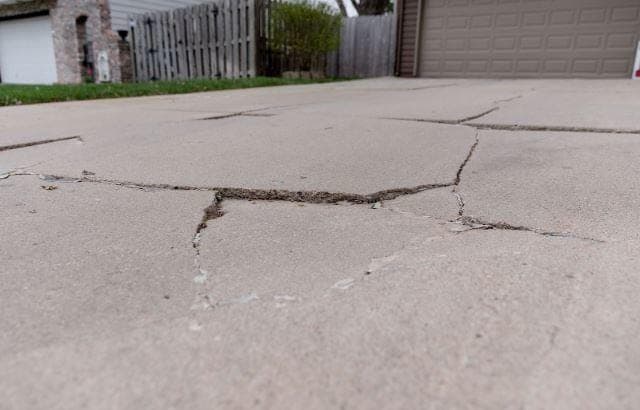
Concrete is not a solid, impermeable block. It has a network of tiny pores that can absorb water, and that water behaves the same way any water does when temperatures drop below freezing: it expands as it turns to ice. That expansion creates pressure inside the concrete's pore structure. When temperatures rise again and the ice melts, the pressure releases, only to build up again the next time temperatures drop. Southwestern Ontario's winters do not freeze once and stay frozen. Temperatures swing above and below zero repeatedly through the season, meaning a driveway can go through dozens of freeze-thaw cycles between November and March. Each cycle adds a small amount of internal stress, and over time that stress shows up as surface scaling, cracking, and in more severe cases, spalling, where chunks of the surface layer break away entirely.
Why road salt makes freeze-thaw damage worse
Road salt, whether it is applied to a driveway directly or tracked in from the street by vehicle tires, changes the chemistry of the water sitting on and in concrete. Salt lowers the freezing point of water, which sounds like it should reduce ice formation, but in practice it does the opposite to unprotected concrete. Because salt-saturated water freezes at a lower temperature than plain water, it stays liquid longer through a cold snap and can penetrate deeper into the concrete's pores before finally freezing. That means salt exposure effectively increases the number of freeze-thaw cycles a given section of concrete experiences over a winter, since it is freezing and thawing across a wider temperature range rather than settling into ice once and staying that way. The combination of deeper penetration and more frequent cycling is why salt-exposed, unsealed concrete tends to show damage faster and more severely than concrete that is simply cold but salt-free.
How sealer interrupts this cycle
A properly applied sealer works by reducing how much water and salt can penetrate into the concrete's pore structure in the first place. If water and salt cannot get in as deeply, there is less material to freeze and expand within the concrete, and the internal pressure that causes scaling and spalling is significantly reduced. This is the core reason sealing matters so much in this climate specifically. TriCity uses a high-quality solvent-based acrylic sealer chosen partly for its strong resistance to road salt, UV exposure and hot tires, all conditions common to Southwestern Ontario driveways. The sealer penetrates into the surface rather than sitting purely as a film on top, which gives it a more durable bond and better resistance to the mechanical stress of tire traffic and de-icing chemicals over a full winter season.
Why breathability matters as much as water resistance
A sealer that blocks water from getting in is only half the equation. Concrete slabs also need to release moisture vapour that is already present beneath the surface, whether from groundwater, the original curing process, or humidity that finds its way in through the sides or joints of the slab. A sealer that blocks water from penetrating but does not allow vapour to escape can trap moisture beneath itself, and when that trapped moisture freezes, it can push against the sealer layer from underneath, causing the sealer to bubble, whiten or delaminate from the surface. This is a common failure point with lower-quality or improperly applied sealers. The solvent-based acrylic sealer TriCity applies remains breathable, allowing that trapped vapour to escape through the surface rather than building up pressure beneath a non-breathable film, which is an important distinction for anyone comparing sealer types or evaluating a previous seal job that has failed.
Recoating and the seamless bond advantage
One advantage of a solvent-based acrylic sealer over the life of a driveway is how it handles recoating. Because the product re-emulsifies previous solvent-based coats, a fresh application bonds seamlessly into the existing sealer layer rather than sitting on top as a separate film. This matters for freeze-thaw protection specifically, since a seamless, uniformly bonded sealer layer has no weak seams or edges where water could work its way beneath the surface. Over multiple reseal cycles, this keeps the protective barrier consistent rather than building up mismatched layers that can eventually separate from each other or from the concrete underneath.
What unsealed damage looks like and what it costs to ignore
Surface scaling usually appears first as a rough, flaky texture where a thin layer of the concrete surface has broken away, often starting at edges, joints or areas that pool water. Left unaddressed through repeated winters, scaling can progress to spalling, where larger chunks of the surface separate, exposing the aggregate beneath and creating an uneven, pitted driveway or patio. Beyond the visual damage, deeper deterioration can eventually affect the structural integrity of the slab, particularly around control joints and edges where water tends to concentrate. Repairing or replacing damaged concrete is a far larger expense than maintaining a regular sealing schedule, which is part of why sealing is best understood as ongoing protection rather than a one-time cosmetic treatment.
How often to reseal for winter protection
Most sealed concrete surfaces in this region need resealing every 2 to 4 years, and driveways exposed to heavy road salt and regular vehicle traffic tend to need attention toward the more frequent end of that range compared to patios or walkways with less direct salt exposure. Timing a reseal for late summer or fall, while temperatures are still reliably in the 10 to 30 degree Celsius range needed for proper application, means the driveway heads into winter with a fresh, fully cured protective layer in place. Watching for early signs that a seal is wearing thin, such as water no longer beading on the surface or a duller, more porous appearance, helps catch the right moment to reseal before a full winter of salt and freeze-thaw exposure does damage the sealer would otherwise have prevented.
Commercial properties and salt exposure
Commercial lots and walkways often face heavier salt application than residential driveways, since property managers tend to salt more aggressively to manage liability around slip-and-fall risk. Combined with higher traffic volumes from vehicles and foot traffic, this typically means commercial concrete surfaces experience faster wear from freeze-thaw and salt exposure than a comparable residential driveway would. A regular sealing schedule matters even more in that context, both to protect the concrete itself and to reduce the long-term cost of surface repairs across a larger commercial area. TriCity's commercial sealing work applies the same solvent-based acrylic sealer and application process used on residential projects, scaled to the larger surface areas typical of parking lots, walkways and loading areas.
Protecting driveways, patios and walkways across the region
This protection matters across every surface type TriCity works with, from plain driveways to stamped patios and exposed aggregate walkways, since freeze-thaw and salt exposure affect all concrete surfaces in this climate regardless of finish. TriCity Concrete Sealing has sealed more than 500 projects across London, Woodstock, Brantford, St. Thomas, Stratford, Ingersoll, Tillsonburg, St. Marys, Aylmer and Simcoe over 8-plus years, backed by a 5-year workmanship warranty and full insurance coverage. Details on the warranty are at /warranty, and specific service areas including /service-areas/woodstock and /service-areas/brantford have more localized information.
Getting ahead of winter
The best time to think about freeze-thaw and salt protection is before the first hard frost, not after a winter of damage has already occurred. A free site assessment and quote can identify whether a driveway, patio or walkway is due for a fresh seal or a recoat ahead of the coming season. Reach out through /contact to get a driveway winter-ready.
Frequently asked questions
Why is road salt so damaging to unsealed concrete?
Salt lowers the freezing point of water, which allows salt-laden water to penetrate deeper into concrete's pores before freezing. This effectively increases the number of freeze-thaw cycles the concrete experiences over a winter, worsening the internal pressure that causes scaling and spalling.
How does sealing actually prevent freeze-thaw damage?
A properly applied sealer reduces how much water and salt penetrate into the concrete's surface. With less moisture able to get in and freeze, there is less internal pressure building up inside the slab, which significantly reduces the scaling and cracking freeze-thaw cycling would otherwise cause.
Does the sealer trap moisture inside the concrete?
No. The solvent-based acrylic sealer TriCity applies is breathable, meaning it allows moisture vapour already inside the slab to escape while still resisting water and salt penetration from the surface. This prevents the bubbling or delamination that can occur with non-breathable sealers.
How often should a driveway be resealed for winter protection in this region?
Generally every 2 to 4 years, with driveways facing heavy road salt and vehicle traffic often needing resealing toward the more frequent end of that range. Late summer or fall is the ideal window to reseal ahead of winter.
What does freeze-thaw damage look like on an unsealed driveway?
It typically starts as surface scaling, a rough, flaky texture where a thin layer of concrete has broken away, often at edges or joints. Left untreated across multiple winters, it can progress to spalling, where larger chunks separate and expose the aggregate beneath.
Is it too late to seal a driveway that already shows some freeze-thaw damage?
Sealing can still protect the surface from further deterioration, though existing damage such as scaling or spalling generally needs repair before sealing to get the best result. A free site assessment can determine the right approach for a driveway that already shows wear.
Free quote
Want us to just handle it?
Free site assessment, finish samples in hand, written quote with a 5-year warranty.
Keep reading
Finishes · 8 min
Matte vs Semi-Gloss vs Gloss: Choosing a Concrete Sealer Finish
The finish you choose changes how a driveway or patio looks and how it performs underfoot. Here is how matte, semi-gloss and gloss actually compare before you decide.
Sealers · 8 min
Solvent-Based vs Water-Based Concrete Sealers: What Actually Lasts in Ontario
Not all acrylic sealers behave the same once winter arrives. Here is how solvent-based and water-based formulas differ and why the choice matters in Southwestern Ontario.
Costs · 7 min
How Concrete Sealing Is Priced: What Goes Into a Quote
Every concrete sealing quote is built around the specific property, not a flat rate. Here is what factors actually shape the number you receive.