Guides/Process·7 min read·Updated September 5, 2026
A sealer is only as good as the surface underneath it. Here is what proper concrete preparation actually involves, and why skipping a step usually shows up within a season.
Key takeaways
- 1Sealer bonds to whatever is on the surface, so any dirt, mildew, efflorescence or old peeling coating left behind gets sealed in along with it.
- 2Concrete needs to be fully dry before a solvent-based sealer goes down, which in Southwestern Ontario usually means at least 24 to 48 hours after washing, weather depending.
- 3Minor surface issues such as small cracks, pitting or spalled edges are best addressed before sealing rather than after, since sealer will not hide or fix structural problems.
- 4Masking off garage doors, siding, planters and adjacent surfaces protects them from overspray during application.
- 5A rushed preparation step is the most common reason a sealer job looks patchy, peels early or fails to bond evenly.
Homeowners often assume that sealing concrete is mostly about the sealer itself, choosing between a matte finish and a gloss finish, or deciding on a non-slip additive. In practice, the finish coat is the easy part. What determines whether that coat looks even, bonds properly and lasts through a few Ontario winters is almost entirely decided before the sprayer ever comes out. Preparation is not a formality tacked onto the front of the job. It is the part of the process that separates a driveway that still looks sharp three years later from one that starts peeling by the following spring.
Why preparation matters more than the sealer choice
A concrete sealer works by penetrating into the surface, or in the case of a film-forming acrylic, by bonding to it. Either way, it needs clean, dry, sound concrete to do that job properly. If there is dirt, mildew, old wax, efflorescence or a failing prior coating sitting on the surface when the sealer goes on, the sealer bonds to that layer instead of to the concrete underneath. The result is not always obvious right away. Sometimes it shows up within weeks as uneven sheen or blotchiness. Other times it takes a winter of freeze-thaw cycles and road salt exposure before the coating starts lifting in patches. Either way, the underlying cause is almost always the same: something was on the surface that should not have been there.
Step one: a thorough pressure wash
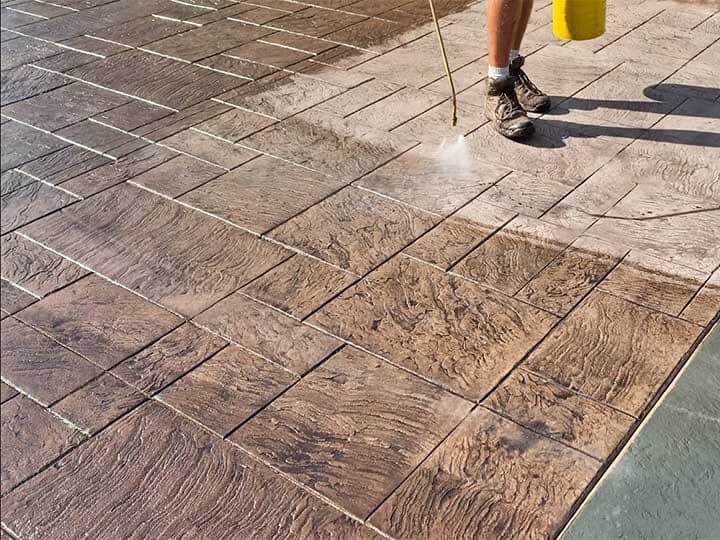
The first real step in preparing concrete for sealing is a thorough pressure wash. This is not a quick rinse. It is meant to strip away accumulated dirt, algae, mildew, efflorescence (the chalky white mineral deposits that surface on older concrete), and any loose or flaking material left over from a previous sealer application. On driveways in particular, oil residue and tire marks need attention as well, since sealer will not bond properly over a film of contamination even if the surface looks clean to the eye.
Concrete that has been sealed before deserves extra attention here. If the old coating is a solvent-based acrylic sealer, most of it will re-emulsify and blend into the fresh coat during application, which is one of the advantages of staying with a solvent-based product for recoats rather than switching sealer types. But any areas where the old coat has already peeled, flaked or gone chalky need to be cleaned back before the new sealer goes down, or those weak spots will simply telegraph through the new coat.
Step two: letting the surface dry completely
This is the step most often rushed, and it is arguably the most important one. Solvent-based sealer needs to bond to genuinely dry concrete, not concrete that looks dry on the surface while still holding moisture underneath. Concrete is porous, and a slab that was pressure washed the same morning can still be damp several millimetres down even if the top looks bone dry a few hours later.
In Southwestern Ontario's climate, that typically means allowing at least 24 to 48 hours of drying time after washing before sealing, and longer in cooler, more humid, or shaded conditions. Humidity, overnight dew, cloud cover and surface shading all slow drying, so a driveway in full sun on a dry September day will be ready faster than a shaded patio the same week. Sealing over concrete that has not fully dried is one of the more common causes of a cloudy or hazy finish, since trapped moisture has nowhere to go once the sealer forms a film on top.
Step three: addressing minor cracks and surface issues
Sealer is a protective coating, not a repair product. It will not fill a crack, level a pitted section, or restore a spalled edge where the surface has flaked away from freeze-thaw damage. Left unaddressed, these issues do not just remain visible under the sealer, they can actually get worse, since a crack that traps water underneath a fresh sealer coat is still vulnerable to the same freeze-thaw cycle that likely caused it in the first place.
Before sealing, it makes sense to repair minor cracks, fill small voids, and address any pitted or spalled areas so the sealer is going onto a sound surface. This is part of the standard prep process on jobs handled through TriCity Concrete Sealing's driveway and patio services, and it is one of the reasons a proper site assessment matters more than a quick phone estimate. Larger structural cracks or significant spalling may need concrete repair work beyond what sealing alone can address, and a straightforward site visit is usually the fastest way to tell the difference between a cosmetic fix and something that needs more attention first.
Step four: masking and protecting surrounding surfaces
Once the concrete is clean, dry and repaired, the last preparation step before spraying is masking. Garage doors, house siding, brick, landscaping beds, planters and any adjacent hardscaping that should not receive overspray get protected before the sealer goes down. This step is easy to overlook when picturing the process, but overspray on siding or brick is difficult to remove once a solvent-based sealer has dried, so a careful masking job upfront avoids cleanup problems afterward.
How this looks different across surface types
Preparation follows the same basic sequence, clean, dry, repair, mask, across driveways, patios, walkways and stamped or exposed aggregate surfaces, but the details shift depending on the surface. Stamped concrete has more texture and more places for dirt and mildew to hide in the grooves, so the wash step often takes longer to get right. Exposed aggregate has exposed stone that can trap grime differently than a smooth broom-finished slab. Commercial surfaces, such as plaza walkways or parking areas, often deal with heavier soiling from vehicle traffic and higher foot volume, and preparation timelines there need to work around business hours, which is covered in more detail on our commercial sealing page. Whatever the surface, the underlying logic is the same: the sealer can only be as good as what it is applied to.
Why professional preparation pays off
It is possible for a determined homeowner to rent a pressure washer and handle the cleaning step, but knowing when concrete is genuinely dry enough, spotting the difference between a cosmetic crack and one that needs repair first, and getting the masking done cleanly around a garage door or planter bed all come down to experience. Over 8 years and 500-plus completed projects, TriCity Concrete Sealing has developed a consistent preparation process that catches the small issues before they become sealer failures. Every job includes a free site assessment and quote, which is also the point where cracks, spalling or drainage issues get identified and discussed before any work begins.
What proper prep sets up for the finish
Once the surface is clean, dry and repaired, applying the sealer itself is comparatively straightforward: a sprayer lays down an even coat, followed by back-rolling to work the sealer into the surface and avoid lap marks. But that step only produces a clean, even result because of the preparation that came before it. A rushed or skipped prep stage is the most common reason a sealed surface looks streaky, develops white haze, or starts lifting within a season, long before the sealer itself would normally be due for a recoat. TriCity Concrete Sealing backs its work with a 5-year workmanship warranty, which reflects confidence in a preparation process built to hold up, not just a finish coat applied over whatever condition the concrete happened to be in that day.
Getting started
If a driveway, patio or walkway in London, Woodstock, Brantford, St. Thomas, Stratford or elsewhere in Southwestern Ontario is due for sealing, or being sealed for the first time, the first step is a free site assessment. That visit is where cleaning needs, drying timelines and any repair work get identified before a quote is put together. Request an assessment through /contact to get the process started.
Frequently asked questions
Can I pressure wash and seal my concrete on the same day?
No. Concrete needs time to dry fully after washing, typically at least 24 to 48 hours depending on weather, humidity and shade. Sealing over damp concrete traps moisture and often causes a hazy or cloudy finish.
Will sealer fill in small cracks in my driveway?
No. Sealer is a protective coating, not a repair product. Minor cracks, pitting and spalled edges should be repaired before sealing so the surface underneath is sound.
Do I need to do anything special if my concrete was sealed before?
Previously sealed concrete gets pressure washed like any other surface, and any peeling or chalky areas of the old coating need to be cleaned back. If the prior sealer was solvent-based, most of it will re-emulsify into the new coat during application for a seamless recoat.
What happens if it rains right after sealing?
Sealer needs dry conditions to cure properly, which is why application only happens when the weather forecast supports it. This is part of why sealing season in this region runs roughly spring through fall, with temperatures generally between 10 and 30 degrees Celsius.
Do you handle the cleaning and repairs, or do I need to arrange that separately?
TriCity Concrete Sealing handles pressure washing, drying assessment, minor repairs and masking as part of the standard process on every job, starting with a free site assessment and quote.
Is preparation different for stamped or exposed aggregate concrete?
The same clean, dry, repair and mask sequence applies, but stamped concrete's grooves and exposed aggregate's textured surface often take more care during washing to remove trapped dirt and mildew before sealing.
Free quote
Want us to just handle it?
Free site assessment, finish samples in hand, written quote with a 5-year warranty.
Keep reading
Process · 6 min
How Long Does Concrete Sealer Take to Dry and Cure
Dry to the touch is not the same as fully cured. Here is what actually happens during each stage of a concrete sealer's dry time and why the wait matters.
Finishes · 8 min
Matte vs Semi-Gloss vs Gloss: Choosing a Concrete Sealer Finish
The finish you choose changes how a driveway or patio looks and how it performs underfoot. Here is how matte, semi-gloss and gloss actually compare before you decide.
Sealers · 8 min
Solvent-Based vs Water-Based Concrete Sealers: What Actually Lasts in Ontario
Not all acrylic sealers behave the same once winter arrives. Here is how solvent-based and water-based formulas differ and why the choice matters in Southwestern Ontario.