Guides/Costs·7 min read·Updated September 5, 2026
Sealing concrete yourself is possible, but the gap between a DIY job and a professional one usually shows up within a season or two. Here is what actually differs.
Key takeaways
- 1DIY concrete sealing is technically possible for a small, simple area, but the equipment, technique and timing matter more than most homeowners expect.
- 2Professional application uses a sprayer with back-rolling for an even coat without lap marks, something difficult to replicate with roller-only application over a large surface.
- 3Preparation, including proper cleaning, full drying time and minor repairs, is where most DIY sealing attempts fall short, not the sealer product itself.
- 4A professional job comes with a workmanship warranty; a DIY job does not, which matters if the coating fails early.
- 5For small, low-visibility areas a careful DIY approach can work, but driveways, larger patios and any surface with visible seams or texture usually benefit from professional application.
Sealer is available at most hardware stores, and a driveway or patio is, in theory, something a determined homeowner could seal themselves over a weekend. Some do, with reasonable results. But the gap between a DIY sealing job and a professionally applied one is rarely obvious on day one. It shows up six months or a year later, in lap marks that catch the afternoon light, in patches that wore through faster than the rest of the surface, or in a coating that started peeling well before it should have. This is an honest look at where DIY sealing holds up, where it tends to fall short, and how to think about the decision without pressure in either direction.
What DIY sealing actually involves
A DIY sealing project generally follows the same broad steps as a professional one: pressure washing, drying time, any needed repairs, masking, and applying the sealer. Homeowners can rent a pressure washer, buy a solvent-based or water-based acrylic sealer, and apply it with a roller or pump sprayer from a hardware store. For a small patio or a short walkway, this is a manageable weekend project for someone comfortable with outdoor maintenance work.
Where it gets harder is scale and consistency. A driveway is a large, continuous surface, and getting an even coat across the whole thing without visible overlap lines, called lap marks, is genuinely difficult without the right equipment and technique. It is also easy to underestimate how much drying time is really needed before sealing, or to miss a hairline crack that should have been repaired first.
Where professional application differs
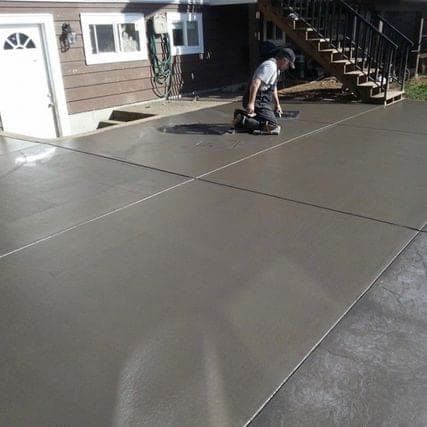
The core technical difference is in how the sealer goes on. Professional application uses a sprayer to lay down an even coat across the full surface, followed by back-rolling, working the sealer with a roller immediately after spraying, to spread it evenly and avoid lap marks. This combination is difficult to replicate with a roller alone, especially over a large area like a driveway, where a homeowner working section by section with a roller almost inevitably ends up with visible overlap lines where wet sealer meets a section that has already started to set.
Beyond technique, there is judgment. Knowing how long concrete really needs to dry given the day's humidity and shade, recognizing which cracks need repair before sealing and which are cosmetic, and reading how the sealer is behaving as it goes down (too thick, too thin, drying too fast) all come from doing the job repeatedly. TriCity Concrete Sealing has completed more than 500 projects across Southwestern Ontario, and that repetition is what allows small issues to get caught and corrected before they become visible in the finished surface.
The preparation gap
If there is one place DIY sealing projects most often fall short, it is preparation, not the sealer itself. A rushed pressure wash that leaves algae or efflorescence behind, sealing before the concrete is genuinely dry all the way through, or skipping repairs on minor cracks and pitted areas are all common shortcuts, usually made unintentionally, that show up as problems later. Our companion guide on preparing concrete for sealing covers this in more detail, and it is worth reading closely before attempting a DIY project, since preparation mistakes are far more likely to cause an early failure than a mistake in the sealer application itself.
Sealer selection matters too
Not all sealers sold for home use are equivalent to what a professional applicator uses. TriCity Concrete Sealing applies high-quality solvent-based acrylic sealer, which penetrates more deeply and enhances colour more effectively than many lower-cost water-based options, and which re-emulsifies previous solvent-based coats for a seamless recoat rather than requiring stripping. Solvent-based products also handle solvent fumes and application conditions differently than water-based ones, and some jurisdictions or products carry handling considerations that a homeowner should research carefully before purchasing. A hardware store sealer is not necessarily the same product or grade as what a professional crew applies, and the difference in performance, particularly resistance to road salt, UV and hot tires, tends to show up over a few seasons rather than immediately.
The warranty difference
One of the more concrete differences between DIY and professional sealing is what happens if something goes wrong. A DIY project has no warranty beyond whatever the sealer manufacturer covers on the product itself, which typically does not extend to application issues like lap marks, uneven coverage or premature peeling caused by inadequate preparation. TriCity Concrete Sealing backs every completed job with a 5-year workmanship warranty, covering the quality of the application itself. That protection matters most for larger, more visible surfaces like a driveway, where a coating failure is both costly to fix and highly visible from the street.
When DIY makes reasonable sense
None of this means DIY sealing is never a reasonable choice. A small, low-visibility patio, a short section of walkway, or a surface where a slightly imperfect finish is genuinely not a concern can be a fair candidate for a careful DIY attempt, provided the preparation steps are followed closely and the homeowner is comfortable with the physical work involved. The lower the visibility and the smaller the surface, the more forgiving the project tends to be of small technique errors.
When professional application is worth it
Larger surfaces, anything highly visible from the street or a main living area, stamped or exposed aggregate concrete with more texture to work around, and any commercial property are where the gap between DIY and professional results tends to matter most. Driveways in particular are difficult to seal evenly without spray-and-back-roll equipment, and the cost of redoing a poorly sealed driveway, both in materials and in the concrete's appearance in the meantime, often outweighs the upfront savings of doing it yourself. Details on driveway-specific considerations are on /services/driveway-sealing, and commercial property owners can find more on /services/commercial-sealing.
How to think about the decision
The honest answer is that DIY sealing is not a matter of ability so much as consistency. A homeowner willing to research thoroughly, take preparation seriously and accept some risk of visible imperfections can produce a workable result on a small, forgiving surface. For anything larger, more visible, or where a warranty and a consistent, professional-grade finish matter, professional application is the more reliable path. TriCity Concrete Sealing offers a free site assessment and quote for anyone weighing the decision, which is also a good opportunity to get an honest read on whether a given surface is a reasonable DIY candidate or better suited to professional work.
Time and equipment costs to factor in
Part of weighing DIY against professional sealing is being honest about what the DIY route actually costs in time and rented equipment, not just the price of a jug of sealer. Renting a commercial-grade pressure washer for a full weekend, buying masking materials, a quality sprayer or roller setup, and the sealer itself adds up, and that is before accounting for the hours spent washing, waiting for the surface to dry, applying the coating, and cleaning up afterward. A driveway-sized project can easily consume most of a weekend from start to finish, and if the weather does not cooperate partway through, drying delays can push the job into a second weekend. None of this makes DIY sealing a bad option on its own, but it is worth pricing out realistically against a professional quote rather than assuming the only cost being compared is the sealer product itself.
What a professional crew catches that a first-time DIYer might miss
Some of the more valuable parts of professional service are things a homeowner sealing their own driveway for the first time would have no way to know to look for. Recognizing when efflorescence needs a different cleaning approach than ordinary dirt, spotting a hairline crack that is actively growing versus one that is stable, judging how a specific area's shade and airflow will affect drying time relative to the rest of the surface, and reading how the sealer is laying down in real time to catch an application issue before it dries are all things that come from repetition. A first attempt at DIY sealing is, by definition, being done without that background, which is part of why results on a first DIY project can vary more widely than results from an experienced crew working the same surface.
Getting started
If you are deciding between DIY and professional sealing for a driveway, patio or walkway anywhere from London to St. Thomas, Stratford, Ingersoll, Tillsonburg, St. Marys, Aylmer or Simcoe, a free, no-obligation site assessment through /contact is a straightforward way to get a professional opinion on your specific surface before deciding which way to go.
Frequently asked questions
Can I seal my own driveway with a roller from a hardware store?
It is possible for a small surface, but rollers alone make it difficult to avoid visible lap marks across a large driveway. Professional application uses a sprayer combined with back-rolling to achieve an even coat without overlap lines.
Is DIY sealer the same quality as what professionals use?
Not always. Professional applicators often use higher-grade solvent-based acrylic sealers that penetrate more deeply and enhance colour more than some retail water-based options. It is worth researching the specific product before assuming equivalence.
What is the biggest mistake people make with DIY sealing?
Preparation shortcuts, particularly sealing before the concrete is fully dry or skipping repairs on minor cracks, cause more early failures than mistakes in applying the sealer itself.
Does a DIY sealing job come with any warranty?
No, beyond whatever the sealer manufacturer covers on the product itself, which typically does not include application issues. Professionally applied jobs through TriCity Concrete Sealing include a 5-year workmanship warranty.
Is DIY sealing ever a reasonable choice?
Yes, for small, low-visibility surfaces like a short walkway section, provided preparation steps are followed carefully. Larger or more visible surfaces like driveways generally benefit more from professional application.
How do I know if my concrete is a good DIY candidate?
A free site assessment can give an honest read on your surface's condition and whether it is well suited to DIY sealing or would benefit from professional application, particularly if there are cracks, prior coatings, or texture like stamped or exposed aggregate concrete involved.
Free quote
Want us to just handle it?
Free site assessment, finish samples in hand, written quote with a 5-year warranty.
Keep reading
Costs · 7 min
How Concrete Sealing Is Priced: What Goes Into a Quote
Every concrete sealing quote is built around the specific property, not a flat rate. Here is what factors actually shape the number you receive.
Finishes · 8 min
Matte vs Semi-Gloss vs Gloss: Choosing a Concrete Sealer Finish
The finish you choose changes how a driveway or patio looks and how it performs underfoot. Here is how matte, semi-gloss and gloss actually compare before you decide.
Sealers · 8 min
Solvent-Based vs Water-Based Concrete Sealers: What Actually Lasts in Ontario
Not all acrylic sealers behave the same once winter arrives. Here is how solvent-based and water-based formulas differ and why the choice matters in Southwestern Ontario.